
A fantastic bike ride in Bergün
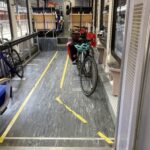
 The morning of the first day begins early, almost still in the dark. Those arriving in Zurich on track 6 save themselves the trouble of searching for elevators, a small but decisive advantage when traveling with a bike. On the IR 35 train, the horizon slowly opens up: Lake Zurich, Lake Walen, the peaks of the Kurfirsten, still shrouded in the early morning shadow. It feels as if the landscape is gradually unfolding, as if it’s welcoming us.
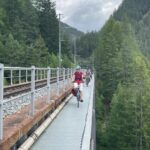
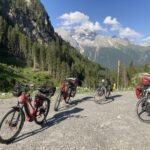
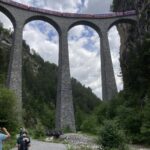
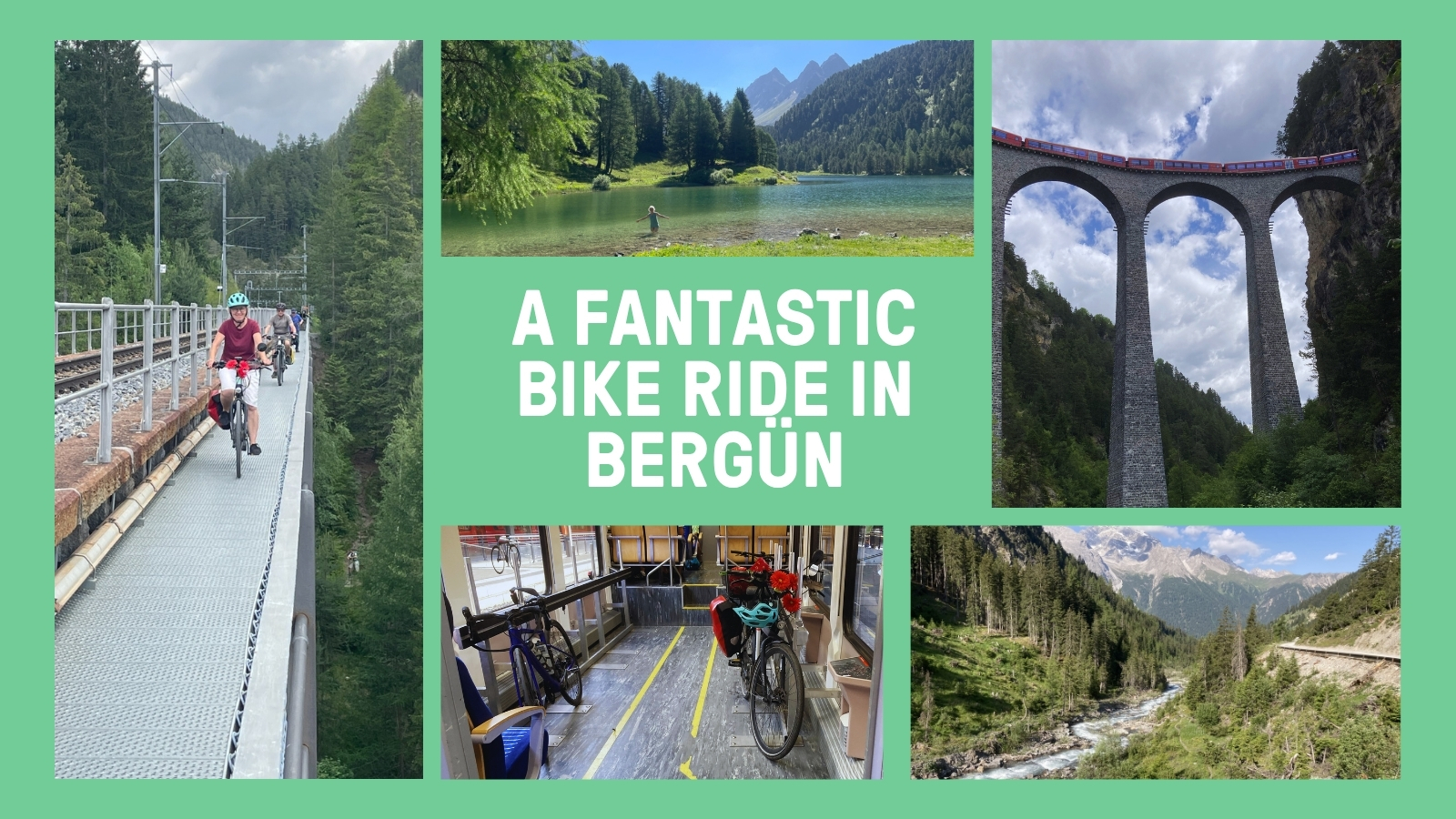
In Bergün, we meet up: a group of siblings and a brother-in-law, all between 60 and 80 years old, yet with the curiosity and energy of teenagers. Our first destination is the Landwasser Viaduct. A tip for photographers: when a train crosses the viaduct, it’s worth pausing for a moment. Most visitors pull out their cameras, and for good reason. The elegance of the arches spanning the gorge, the way the train glides over it as if weightless, is a moment of collective admiration.
Then we choose a path that takes us behind the viaduct—a hiking trail that winds steeply and bumpily up the mountain. Here’s an important note: with mountain bikes, this trail would be a breeze, but with regular bikes, it becomes a challenge. Those unwilling to push their bikes should avoid this section. We push, we pant, we laugh. The nature around us is wild and untouched, and suddenly we discover the Red Helleborine, not a bird, but a rare orchid hidden among the rocks. It’s as if the landscape is rewarding us for our effort.
By the end of the day, we’ve only covered 34 kilometers—but what kilometers! Every meter was filled with exertion and wonder at the beauty surrounding us.
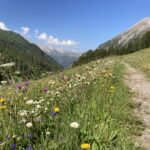
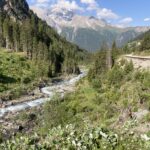
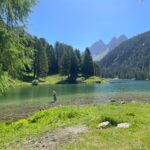
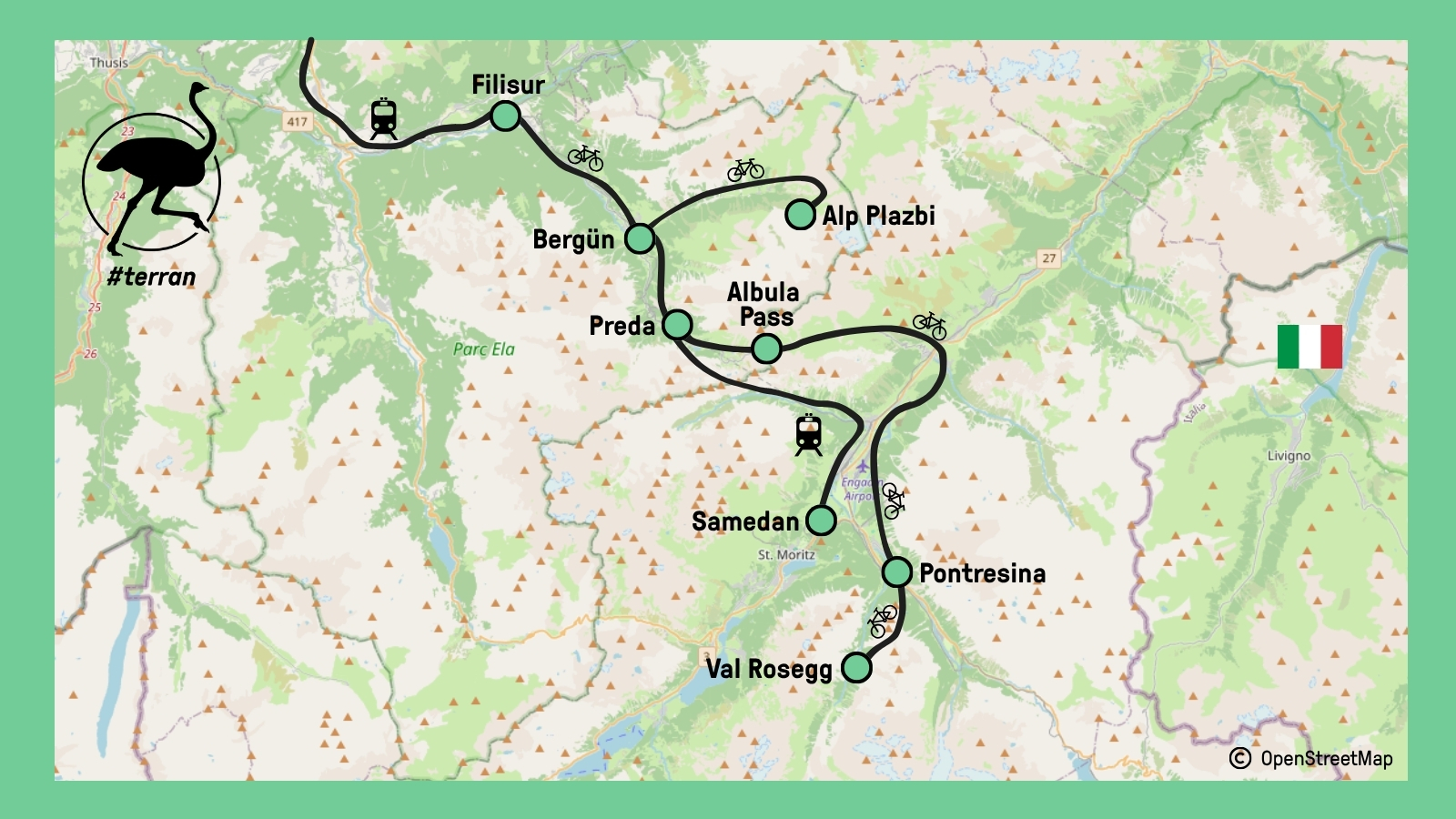 The next day, our route takes us over the Albula Pass. The road is quiet, traffic is light, and the climbs are gentle, perfect for a relaxed bike ride. We frequently stop to admire the bridges of the Rhaetian Railway, waiting for trains to pass. The Albula River flows beside us, its waters crystal clear and icy. Upon reaching Lai da Palpuogna, we unload the bikes and hike for an hour through a sea of flowers. Anyone with time should definitely take a break here. The variety of alpine flowers is overwhelming, and the lake’s tranquility invites you to linger.
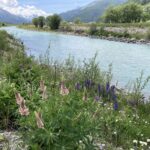
On the other side of the pass, we reach La Punt. We follow the Inn River, then the Flaz, until we arrive in Pontresina. The cycling path along the Flaz is one of the most beautiful and comfortable in the region: a hidden gem for those seeking a pleasant ride with breathtaking views. The spotted nutcracker sings its song to us. The Roseg Valley is touristy, but on a weekday, we almost have it to ourselves. After 66 kilometers and 1,545 meters of elevation gain, we return to Bergün, tired but fulfilled.
On the last day, we travel from Bergün along the Ava da Tuor. Those who take the detour to Tuor Chant are rewarded: here, you can rent scooters and enjoy a beautiful hiking trail leading to Alp Plazbi. The landscape grows wilder, more solitary. At 2,069 meters above sea level, the world seems to stand still. My brother and one sister explore the flower meadows, while my younger sister and I descend to the river. There, I discover something unique: the shadow of a gentian root, with a lichen embedded in the stone at its center, like a natural work of art.
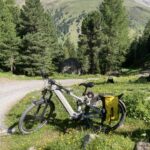
Then there’s the Piz Kesch mountain hut. A place distinguished by its cuisine and unique atmosphere. And yes, there really are green bike parking spots. But the return trip becomes a contrast: rain lashes at us, the cold seeps into our bones, while we know that back home, the sun is blazing at 36 degrees. A final tip: the weather in the mountains can change rapidly. Those who aren’t prepared will be surprised, for better or for worse.
What remains?
Memories of the flowers: Red Helleborine, gentian, edelweiss, martagon lily, cat’s paw, golden veronica, alpine daisy, mealy primrose, spring gentian, cushion pink, mezereon, alpine clover, arnica. The marmots, the butterflies, the scent of Swiss stone pine wood and resin. The moments when all we could do was marvel. What more could one want?